
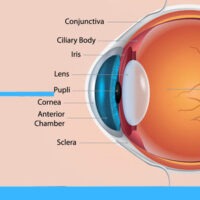
The cornea is your eye’s clear, protective outer layer and serves as a barrier against dirt, germs, and other things that can cause damage. As light enters your eye, it gets refracted, or bent, by the curved edge of your cornea. This helps determine how well your eye can focus on objects close-up and far away. The three major corneal layers are: Outer layer of the cornea or epithelial[...]
Diabetic Retinopathy is diabetic eye disease and a leading cause of blindness. One recent study found that six out of 10 people with diabetes did not get annual dilated eye exams that could save their vision. This is only one reason we stress the importance of getting an annual eye exam. Diabetic Retinopathy is the result of damage to the small blood vessels and neurons of your [...]

It is important to understand beauty and makeup habits that can seriously damage your eyes and then take measures to minimize those risks. Applying eyeliner inside the lashes - Coloring inside can bring bacteria into your eye and clog the oil secreting glands that protect your cornea. Sharing making up with friends - cross-infection is the result. To avoid this, do not use [...]
Refraction is the process of determining your eyeglass or contact lens prescription. This vision test is an examination that tests your ability to see an object at a specific distance. Refraction is the part of your comprehensive eye exam that determines the lens power you need to compensate for any refractive error (nearsightedness, farsightedness or astigmatism). Eyes will [...]

A detached retina can occur at any age, but it is more common in midlife and later. Conditions that can increase your risk of a retinal detachment include nearsightedness; diabetes especially if the diabetes is poorly controlled, previous cataract surgery; glaucoma; severe trauma; previous retinal detachment in your other eye; family history of retinal detachment; or weak areas in your retina. [...]
Dry eye syndrome is a chronic and typically progressive condition. Depending on its cause and severity, it may not be completely curable. But in most cases, dry eyes can be managed successfully, usually resulting in noticeably greater eye comfort, fewer dry eye symptoms, and sometimes sharper vision as well. Because dry eye disease can have a number of causes, a variety of treatment approaches are[...]
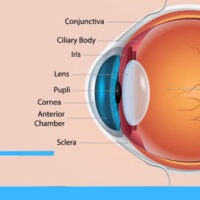
Accommodation: Accommodation is the ability to adjust the focus of the eyes as the distance between the individual and the object changes. Children frequently use this vision skill in the classroom as they shift their attention (and focus) between their book and he chalkboard for sustained periods of time. Being able to maintain focus at near for sustained period of time is important for reading, [...]
Learn more about identified adverse reactions of drugs with manifestations in your eyes. Chloroquine, an anti-malarial drug, also rarely used for arthritis, can cause degeneration of your optic nerve. Heart medication - There is an association between Amodarone and optic neuritis or optic neuropathy. Patients taking this medication should have regular ophthalmic examinations. Nalidixic acid is [...]

There are many interactions of drugs with your eyes and vision. We do not intend to give you all possible ocular side effects from different medications. Instead, we will share common ocular side effects, or those which deserve special mention. Just because a drug is not listed does not mean that it does not have any possible ocular side effects. Antidepressants prescribed for depression, such as[...]
EYE FACT - The human eye can amazingly distinguish about 10 million colors. EYE FACT - If the human eye was a digital camera, it would have 576 Mega pixels. EYE FACT - It is impossible to sneeze with your eyes open. EYE FACT - Night vision goggles are green because the human eye can differentiate more shades of green than any other color. EYE FACT - About 2% of women have a rare genetic mutation [...]
Veteran Helping Veterans - Local Bucks County, PA Independent Optician

Copyright © 2016-2022
All Rights ReservedCredit Cards Accepted

Wohl Optics 550 Street Rd. Warminster, PA 18974 (215) 443-7706 Privacy Policy HIPAA Sitemap